
Meet Ningaloo's Local Mantas
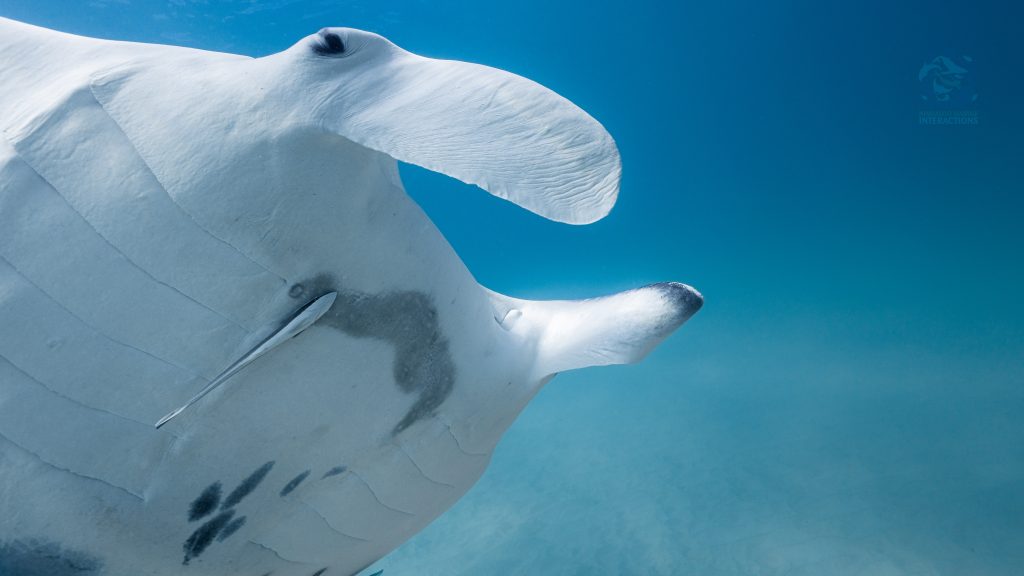
Isobel is one of Coral Bay’s beloved semi-resident manta rays, frequently spotted in the area since 2005. She was named after our skipper Frazer’s mum.
An unfortunate threat our coastal mantas face is entanglement. Isobel was found entangled in fishing line in 2021. Our team carefully removed it, helping to protect her from further harm.
She has reached her full wingspan of 4 meters, and her calm, majestic presence continues to captivate both our team and guests.
Kenny is perhaps the most infamous male manta ray in Coral Bay as he is easily recognisable by a distinct injury sustained in 2016.
Kenny is missing his tail and the bottom of his claspers, despite this, he is known for his relaxed demeanour and still tries his luck with the ladies in mating season!
He is named after our skipper Frazer’s late father, so safe to say he holds a special place in all our hearts.

Freckles is arguably one of the most well-known and beloved manta rays in Coral Bay. Featured on numerous posters and merchandise, she’s a true local celebrity. Her name comes from the distinctive “freckled” pattern on her belly, which makes her easy to recognize. A slow and graceful beauty, Freckles carries herself with elegance fitting her star status.
Most recently, Freckles has been pregnant in 2024, adding another chapter to her remarkable life.
We believe she is one of the oldest manta rays in the area, estimated to be around 35 years old, as she was almost at full size when first sighted.
Elle is one of Coral Bay’s semi-resident manta rays, holding a special place in the hearts of locals and visitors alike. As a melanistic manta ray, Elle stands out with her unique dark pigmentation on both her back and belly, accented by a small white patch—her signature identifying mark.
Melanistic mantas are rare, making up less than 20% of the Ningaloo manta ray population, and Elle is one of the most cherished. In 2024, she experienced her most recent pregnancy, showcasing her continued role in the region’s vibrant marine ecosystem.
Known for her calm and relaxed nature, Elle is a favorite among snorkelers in Coral Bay, providing an unforgettable experience for all who encounter her.
Cherub was first sighted in 2005 in Stanley Pool — just a baby with only around a 1.5 metre wingspan. Even then, Frazer noted exactly what makes her unforgettable today: she was curious, playful, and interactive.
Cherub isn’t a year-round resident, and no one really knows where she disappears to between visits. But when she is in town, she makes sure everyone notices. She’s interactive with snorkellers, often flipping a closer look at them.
She also has a cheeky streak. Cherub is known for stirring up a bit of chaos during feeding sessions — cruising straight through the middle of other mantas and stealing the spotlight every chance she gets.
She might not visit as consistently as some of our regulars, but when Cherub shows up, she never disappoints.
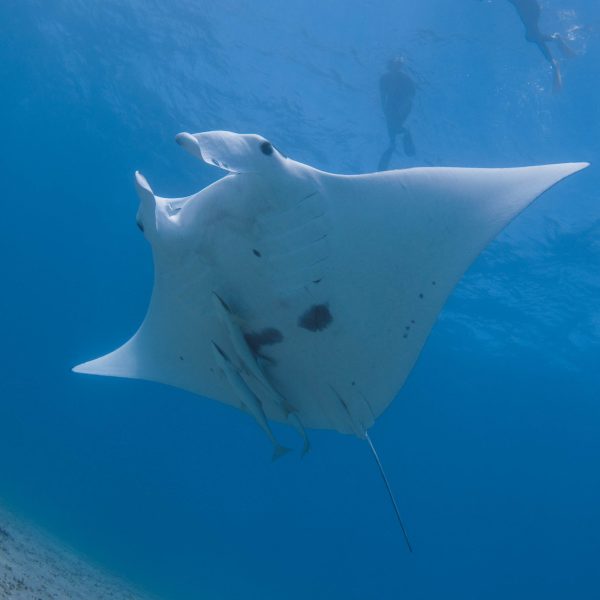
Rastas is the 41st manta to be catalogued. First sighted in 2005. We’re fortunate to spend a lot of time with him in the waters here in Coral Bay.
Though don’t let his name fool you – Rastas is far from laid-back! In fact, he’s quite the cheeky character, making swims with him both challenging and full of laughter.
Easily identifiable from above by the distinctive ‘M’ shaped scar on the top of his mouth and his stunning colouring. Rastas has earned a reputation as a ladies’ man, being involved in plenty of courting over the years.
(Photo: Sophie Riedel)
Ningaloo Manta Project
Frazer’s Early Work
Frazer began building the first photographic catalogue of Ningaloo’s manta rays while studying their feeding habits and movement patterns in Coral Bay. Working from the Murdoch University Coral Bay Research Station, his early research combined acoustic tagging to track fine-scale movements with plankton sampling and long-term sighting trend analysis.
The formal catalogue was established in 2006, though he was recording manta sightings at Ningaloo before then. These sightings helped form the foundation of one of Australia’s longest-running manta monitoring efforts.
Citizen Science and Ongoing Research
Today, Ningaloo Marine Interactions continues this work through ongoing contribution to the citizen-science manta catalogue. By collecting identification photos on every tour and tracking returning individuals, we help build a clearer picture of population structure, site fidelity, and seasonal behaviour.
Our long-term goal is simple: to support research that strengthens the push for improved protections for manta rays in Western Australia.
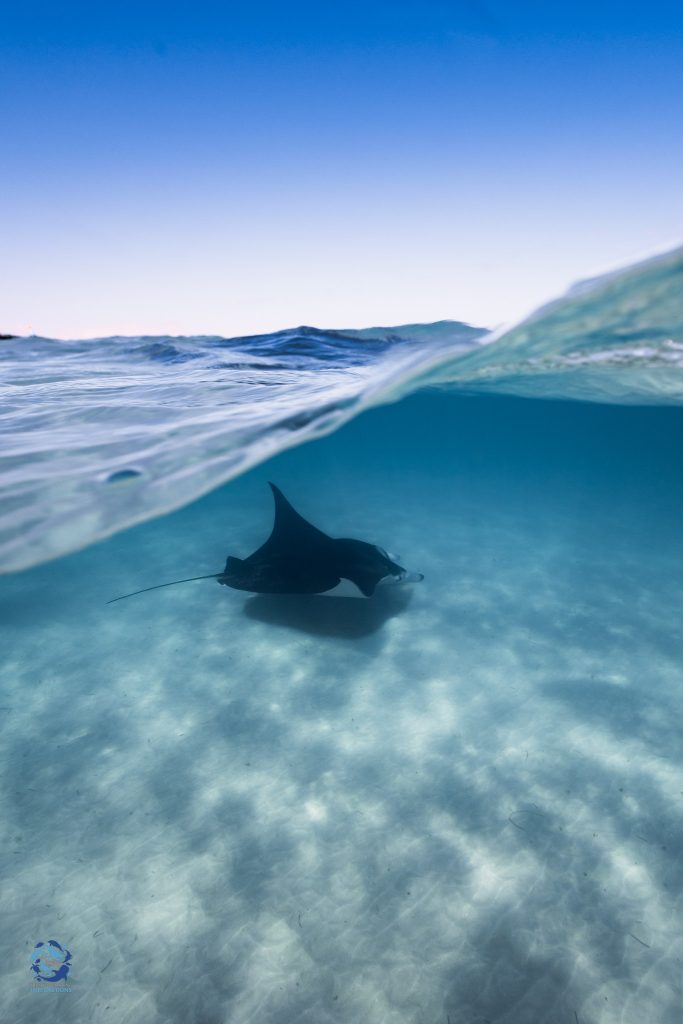
Manta Ray Facts – Coral Bay, Ningaloo Reef
These gentle giants are some of the most captivating creatures in our waters, and learning about their behavior, size, and conservation is part of the unforgettable experience on our tours below are some basic facts on the Ningaloo Manta Population.
Coastal and Oceanic Mantas
-
Coastal Manta Ray (Manta alfredi) – the most commonly seen species at Ningaloo, with a wingspan of up to 4.5 m, residents to the reef year-round.
-
Oceanic Manta Ray (Manta birostris) – larger and highly seasonal, occasionally visiting Ningaloo, reaching wingspans over 7 m.
Unique Identifiers
Each manta ray has distinctive belly patterns, enabling individual identification for research and conservation.
Feeding and Behavior
-
Mantas are filter feeders, mostly feeding on plankton. Ningaloo Reef is rich in plankton, attracting both resident and seasonal manta rays.
-
Mantas are intelligent and sometimes curious, having the ability to turn off their fight or flight response.
Lifespan
While we don’t know their exact life span, we believe mantas can live anywhere from 35 – 50 years.
Conservation Status
Manta rays face threats from fishing, entanglement, and habitat loss. Globally, oceanic manta rays are classified as endangered, and coastal manta rays are considered vulnerable.
Fortunately, the population of manta rays in Coral Bay is not impacted by threats such as finning or hunting, and pollution levels are relatively low. However, increasing tourism activity and in water interactions can place pressure on these gentle giants.
At Ningaloo Marine Interactions, we are committed to minimizing our impact on local Ningaloo Reef manta rays by maintaining respectful behavior during snorkelling tours and avoiding unnecessary disturbance. We continue to contribute to the Ningaloo Manta Project, helping monitor manta populations at Ningaloo Reef and work towards getting protection for this magnificent marine species.